Why Construction and Oil Field Workers Make the Best Welding Students
Pipeline foremen consistently say that their best new hires come from construction and oil field backgrounds. The reason is transferable skills. A construction laborer who has spent three years on job sites already understands crew hierarchy, safety protocols, and what it means to show up at 5 a.m. ready to work. An oil field roughneck who has done two-week rotations on a drilling pad already knows how to travel for work, handle extreme weather, and perform under pressure.
These skills cannot be taught in a classroom. They are built through years of physical work in demanding conditions. When you walk into Western Welding Academy, you are not starting from zero the way a college student or an office worker is. You are starting from a foundation of physical endurance, work ethic, and job site awareness that accelerates your training. You are learning one new skill (pipe welding) on top of a body and a mindset that are already conditioned for the work. Learn about what employers actually look for when hiring new welders.
The Pay Gap Between Your Current Job and Pipe Welding
Construction laborers earn $35,000 to $55,000 per year depending on region and specialization. The ceiling for most laborers without a trade certification is around $65,000 as a foreman, which takes 5 to 10 years to reach. Oil field hands earn $45,000 to $75,000 depending on position and rotation schedule. The ceiling for most oil field workers without a specialized skill is around $90,000 as a lead hand, and that pay is tied directly to oil prices. When prices drop, hours get cut and layoffs follow.
Pipe welders earn $60,000 to $125,000 or more per year with the right certifications. The ceiling exceeds $150,000 for pipeline and shutdown work. The demand is structural, not cyclical. The American Welding Society projects 82,500 new welders needed every year regardless of oil prices because the infrastructure, refinery, and manufacturing sectors all need pipe welders. See the full breakdown of what pipe welders actually earn after graduation.
| Factor | Construction Laborer | Oil Field Hand | Pipe Welder (WWA Expert) |
|---|---|---|---|
| Pay Range | $35K to $55K | $45K to $75K | $60K to $125K+ |
| Earning Ceiling | $65K (foreman) | $90K (lead hand) | $150K+ (pipeline/shutdown) |
| Training to Top Pay | 5 to 10+ years on the job | 3 to 7 years | 24 weeks + 90 days |
| Job Security | Seasonal, project-based | Tied to oil prices | 82,500 welders needed/yr |
| Transferable Skills | Physical endurance, crew work | Safety culture, travel, pressure | All transfer directly to pipeline |
Close the pay gap in 24 weeks. Call Western Welding Academy at (307) 284-5313 or apply now to upgrade your career.
How the Training Works for Blue-Collar Workers
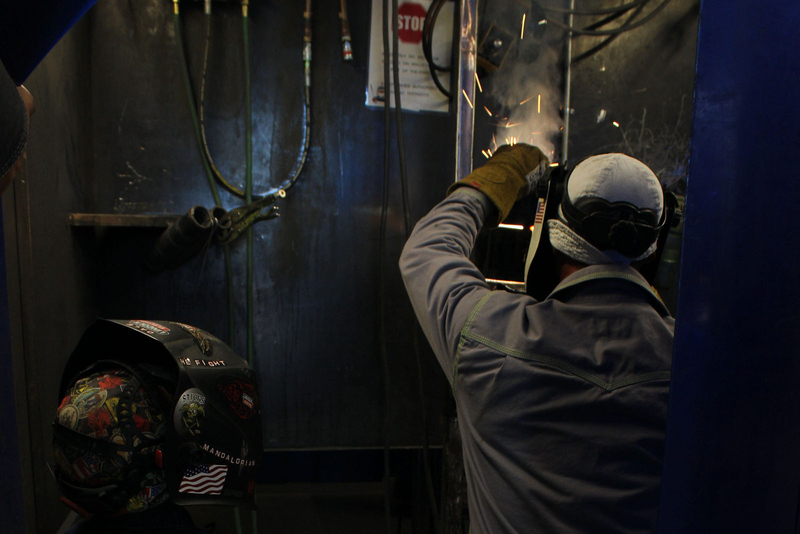
The Expert Pipe Welder program runs 24 weeks at $35,800. Students weld 40 hours per week at 85% booth time. For someone coming from construction or oil field work, the daily rhythm feels familiar. You show up early, you work all day with your hands, and you go home tired. The difference is that you are building a certified skill that doubles your earning potential instead of doing general labor at a capped rate.
The Foundational Pipe Welder runs 12 weeks at $17,050 for workers who want the fastest possible upgrade to entry-level pipe welding. For construction workers with some welding exposure, this may be enough to start earning $40,000 to $60,000. The option to upgrade from basic to full pipe certification later means you do not have to commit to the full 24-week track upfront if your finances require a faster return.
All tuition is all-inclusive with housing, tools, materials, and PPE. You fly to Gillette, Wyoming and the school handles the rest. 95% of students come from outside Wyoming. The all-inclusive structure eliminates the housing and equipment costs that stop many blue-collar workers from enrolling.
Oil Field Layoffs Are Not a Setback. They Are a Trigger.
Oil field workers face a unique risk: their income is tied to commodity prices. When oil drops, hours get cut and layoffs follow. Every cycle produces a wave of experienced oil field workers looking for their next move. Pipe welding is the upgrade that makes the next cycle irrelevant. A certified pipe welder works in oil, gas, refinery, manufacturing, infrastructure, and power generation. The demand is not tied to a single commodity.
If you have recently been laid off from an oil field job, the timing is actually ideal. You have the physical conditioning, the travel willingness, and the job site awareness. You need the certification. 12 to 24 weeks of training converts your existing blue-collar foundation into a certified, high-paying skill. See how career switchers in their 30s approach the same decision.
What Verified Graduates Earn After Switching
The numbers below come from verified Western Welding Academy graduate records. These are the earnings that close the pay gap between general blue-collar work and certified pipe welding.
Source: WWA website (Leyton, Gavin, David). Graduate outcomes tracking (Noah, Hank).
Leyton Wagner earns $4,514 per paycheck. For a construction worker earning $20 per hour, that single biweekly check is more than a month of take-home pay at the old rate. Gavin Walden earns $3,986 per paycheck. David Smolek earns $3,417 per paycheck, which annualizes to roughly $88,000. Even at the lower end of the verified range, the career switch produces a $33,000 to $53,000 annual raise over a $35,000 to $55,000 construction salary.
Noah clears $2,800 per week on the North Slope in Alaska. For an oil field hand who already knows the North Slope rotation lifestyle, the transition to pipe welding on the same site doubles the weekly rate. Hank reached $150,000 per year by age 21. The pipe does not care whether you came from construction, oil field, or a desk job. The certification and the weld test results determine the pay.
Same job site. Double the pay. Call Western Welding Academy at (307) 284-5313 or apply now to make the switch.
Frequently Asked Questions
Q1. Can a construction worker become a pipe welder?
Yes. Construction workers are among the most successful welding students because they already have physical endurance, job site awareness, and crew experience. No prior welding experience is needed. Training takes 12 to 24 weeks.
Q2. Is pipe welding a good career after oil field work?
Yes. Pipe welders earn $60,000 to $125,000+ per year across multiple industries. Unlike oil field work, pipe welding demand is not tied to commodity prices. The certification opens refinery, infrastructure, manufacturing, and pipeline work.
Q3. How much more do pipe welders make than construction workers?
Expert Pipe Welder graduates earn $60,000 to $125,000 per year. Construction laborers earn $35,000 to $55,000. The annual raise ranges from $25,000 to $70,000 depending on the starting point and program completed.
Q4. How long does the switch take?
The Expert Pipe Welder program takes 24 weeks. The Foundational takes 12 weeks. 94% of graduates are hired within 90 days. The total timeline from enrollment to first pipeline paycheck is 6 to 9 months.
Q5. Do I keep working while in welding school?
No. The program runs 40 hours per week at 85% booth time. It is a full-time commitment. Housing is included in all-inclusive tuition. Financial aid including Climb Credit and scholarships are available.
Q6. What makes Western Welding Academy different from other welding schools?
Western Welding Academy delivers 85% booth time, all-inclusive tuition covering housing, tools, and materials, lifetime retraining for every graduate, 330 combined years of instructor pipeline experience, and a 94% hire rate within 90 days verified by a 234-alumni survey. It is the #1 AWS Accredited Testing Facility in the country.
Stop Working Next to Pipe Welders. Become One.
You already have the body, the work ethic, and the job site awareness. The only thing between you and pipe welding pay is 12 to 24 weeks of training and a certification. Western Welding Academy turns construction workers and oil field hands into certified pipe welders with 94% placement. Call Western Welding Academy at (307) 284-5313 or apply now to close the pay gap.


.jpg)


.jpg)


.jpg)
.jpg)
.jpg)
.jpg)
.jpg)
-thumbnail.jpg)

.jpg)