What Determines How Long a Welding Job Takes
Five variables control every welding timeline. The first is joint type. A single pass fillet weld on flat plate finishes in minutes per foot. A multi pass groove weld on heavy wall pipe takes hours. Second is material thickness. A 1/8 inch sheet needs one pass. A 1 inch plate needs six to twelve fill passes before the cap.
Third is welding process. MIG runs 10 to 18 inches per minute on light fillets. TIG runs 2 to 7 inches per minute on the same joint. Fourth is position. Overhead welding runs 40% to 60% slower than flat position work on identical joints. Fifth is welder skill. A trained welder with tight arc control wastes less time on restarts, grinding, and rework.
How Long Common Welding Projects Take
Small repairs are the fastest category. Fixing a cracked trailer hitch, a broken gate hinge, or a snapped bracket takes 30 minutes to 2 hours, including prep and cooldown. Most shop welders knock out three to five of these per shift.
Medium fabrication projects take longer. Building a set of warehouse storage racks, a custom truck bumper, or a staircase railing takes 1 to 5 days. The bulk of that time goes to layout, fit up, and tack welding. Actual arc on time is only 20% to 40% of total project time in a typical shop.
Large scale construction projects stretch into weeks or months. A structural steel frame for a commercial building takes 4 to 12 weeks of welding labor. A pipeline spread covering 20 miles of 24 inch pipe takes a full crew 3 to 6 months. Industrial shutdown and turnaround work runs 2 to 6 weeks with 12 to 16 hour shifts and 60 to 80 hour weeks.
How Welding Process Affects Project Time
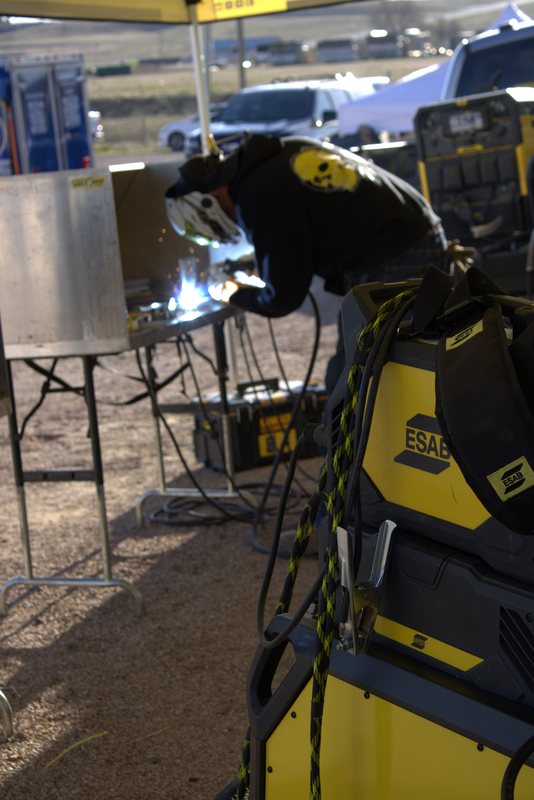
The process you choose determines how fast the weld goes down. MIG (GMAW) is the fastest manual process. It runs 10 to 18 inches per minute on light to medium fillets and deposits metal continuously without stopping to change rods. A 1/4 inch fillet spanning 8 feet takes about 18 minutes total with MIG in a shop setting.
Flux core (FCAW) runs 6 to 12 inches per minute on structural fillets and heavy plate. It handles outdoor wind better than MIG and deposits more metal per pass, making it the go to process for structural field work.
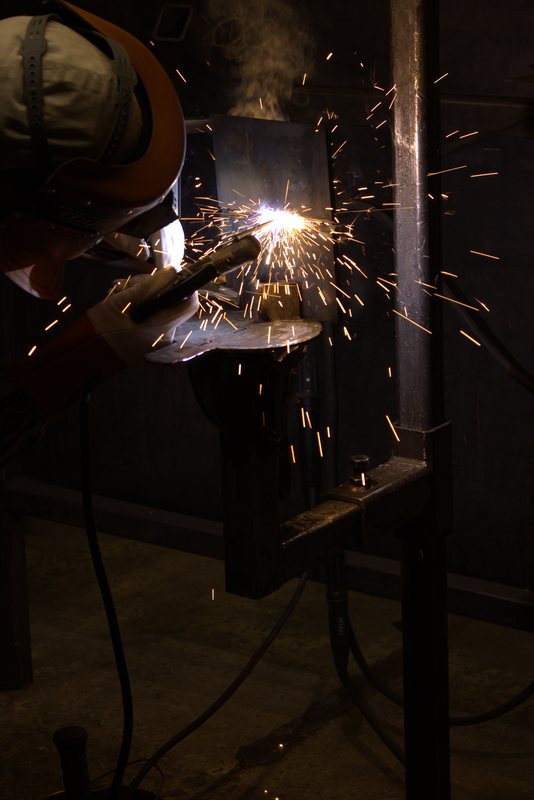
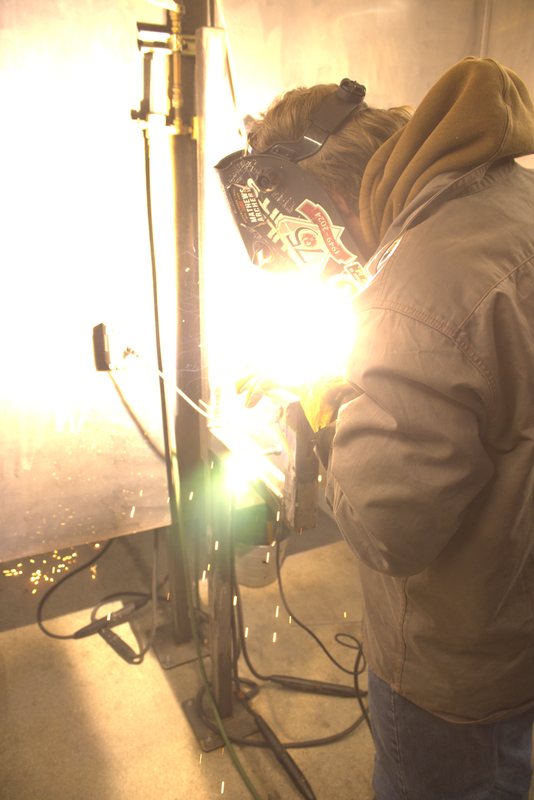
Stick (SMAW) runs 4 to 9 inches per minute depending on electrode size and position. It requires rod changes every few minutes, which drops the arc on factor to 20% to 30% of total time. That same 8 foot fillet that took 18 minutes with MIG takes close to 50 minutes with stick. Despite the slower speed, stick remains the standard for pipeline welding and field repair because it works in any position and any weather.
TIG (GTAW) is the slowest manual process at 2 to 7 inches per minute. It produces the highest quality welds on stainless, aluminum, and thin wall pipe, but that precision costs time. A joint that takes 2 minutes per foot with MIG takes about 9 minutes per foot with TIG.
Ready to build real speed on every welding process? Apply now or call (307) 284-5313 to talk to an admissions advisor.
How Pipe Welding Time Breaks Down
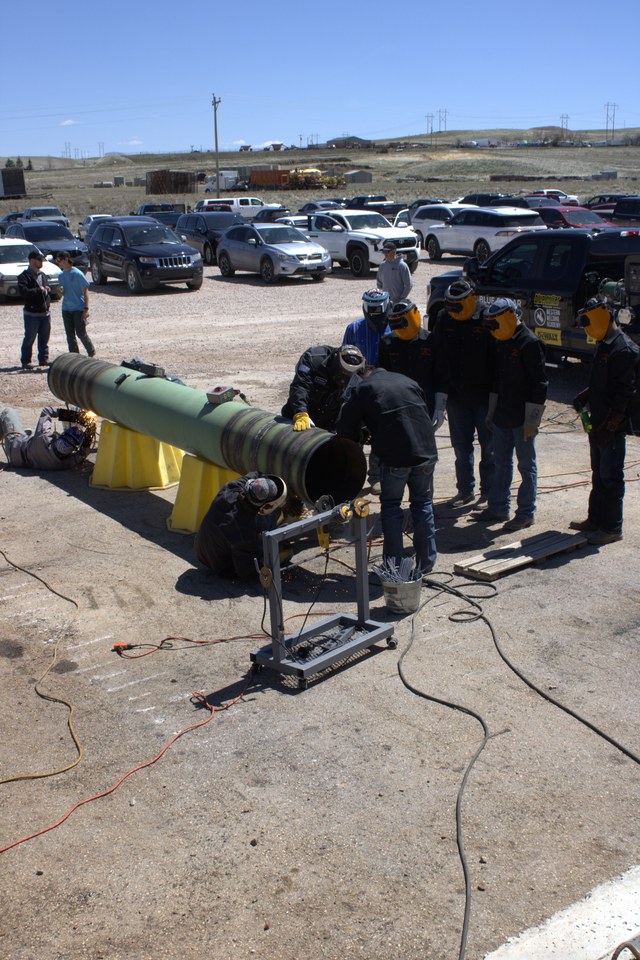
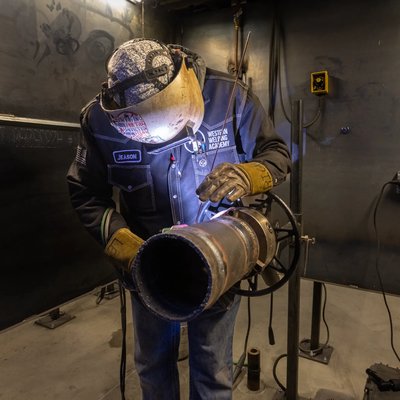
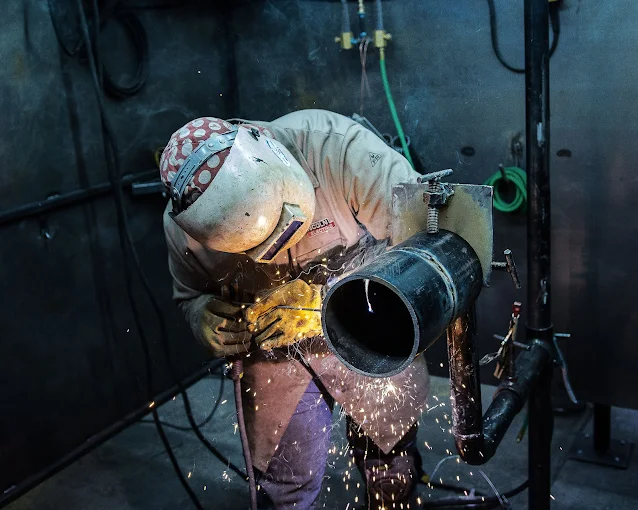
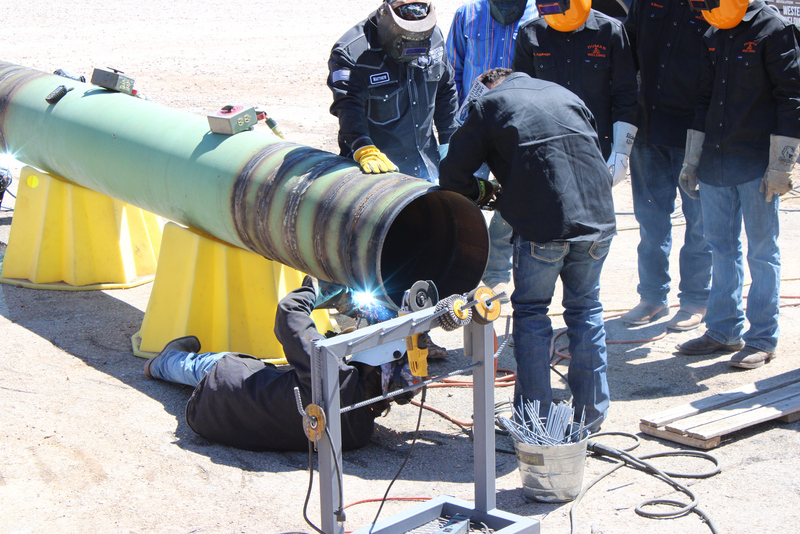
Pipe welding runs on a different clock than plate work. Every joint needs a root pass, fill passes, and a cap pass. A 6 inch schedule 40 carbon steel pipe joint takes 45 minutes to 1.5 hours depending on the process and number of passes. A 12 inch schedule 80 joint takes 2 to 4 hours.
The industry measures pipe welding productivity in diameter inches. One diameter inch equals one weld on one inch of pipe diameter. A single weld on a 6 inch pipe is 6 diameter inches. Production rates on cross country pipeline work average 30 to 50 diameter inches per welder per day, depending on wall thickness, terrain, and weather.
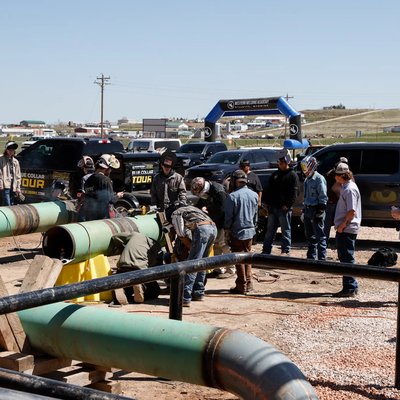
Field variables eat into arc on time. Setup, tacking, alignment, and position changes often exceed the actual welding time on pipe joints. The arc on factor for open root pipe work drops to 15% to 25% of total clock time because of those position changes and the precision required for each pass.
Why Trained Welders Finish Jobs Faster
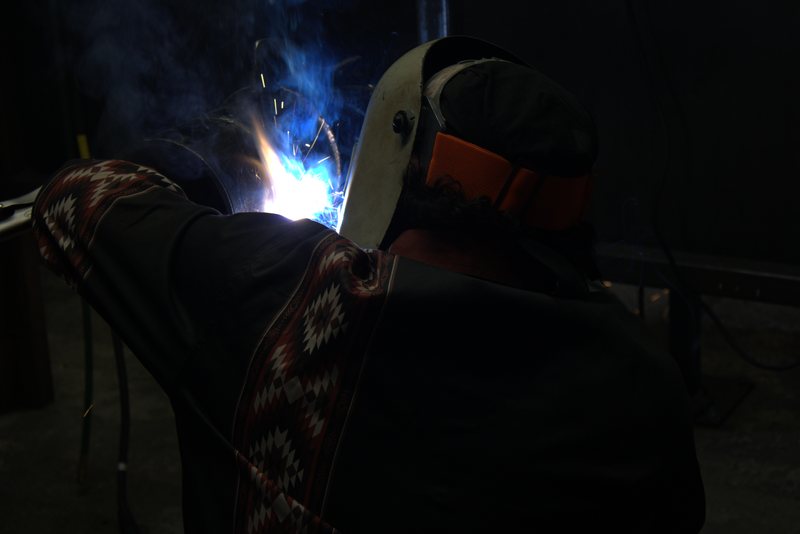
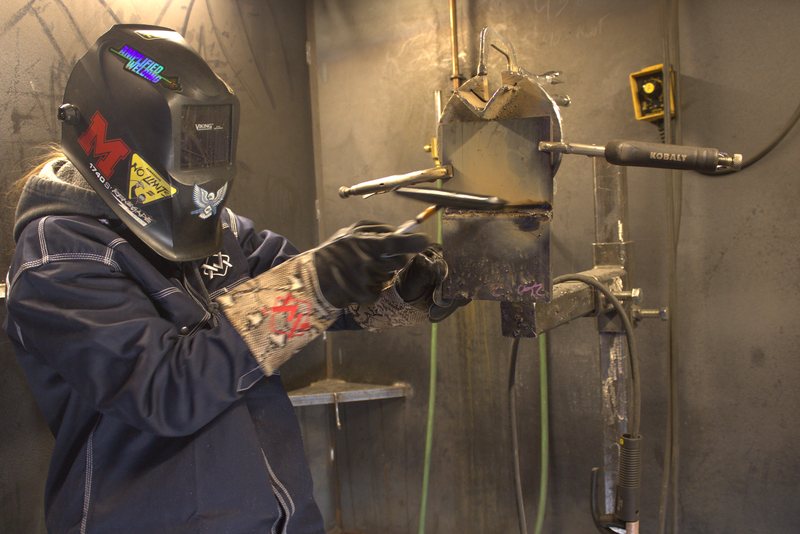
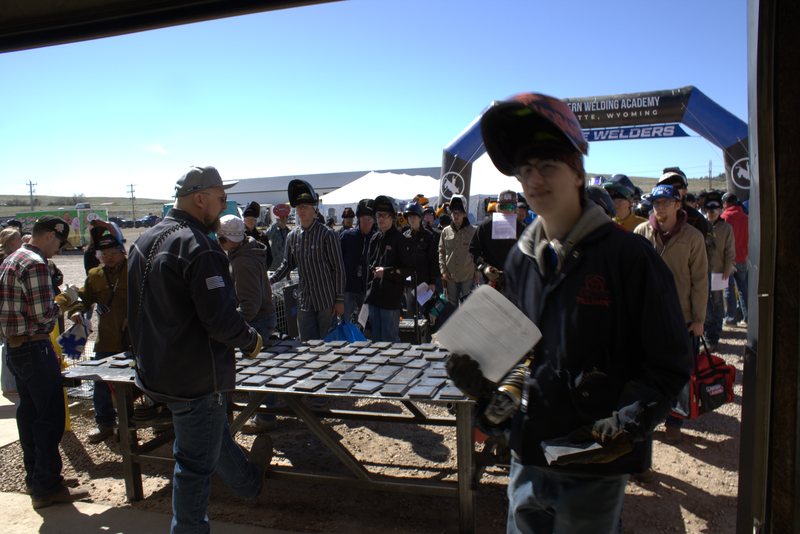
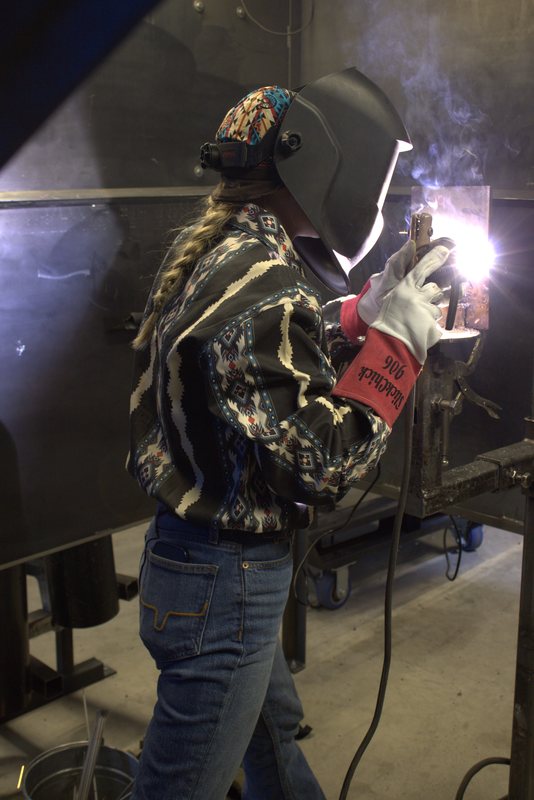
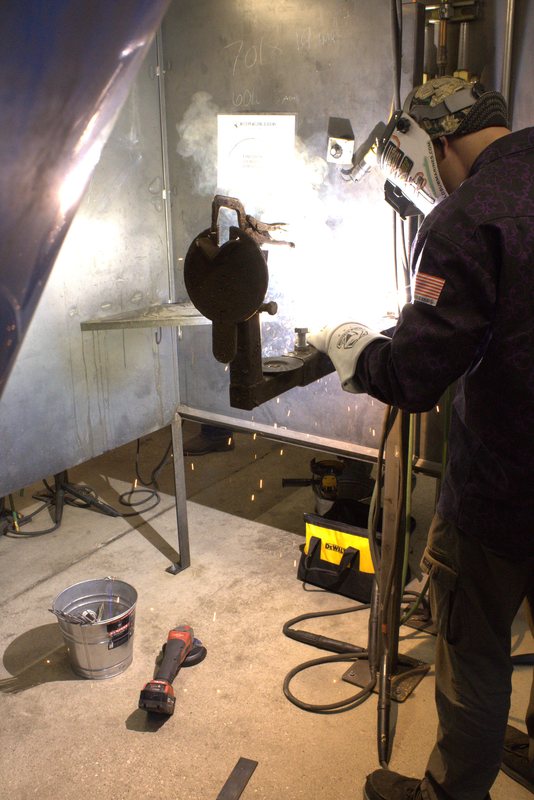
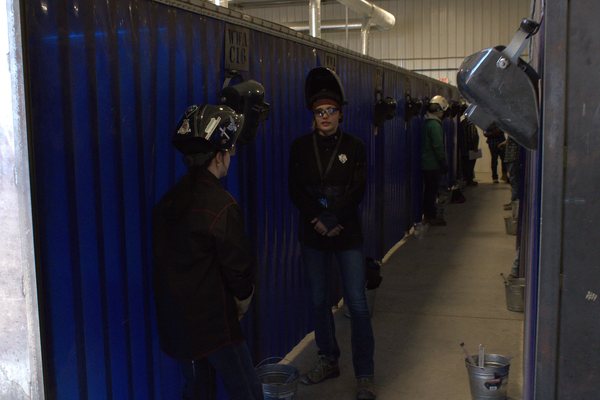
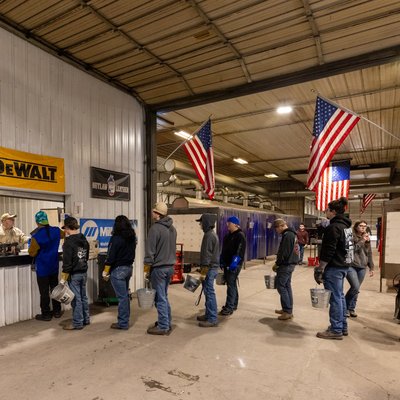
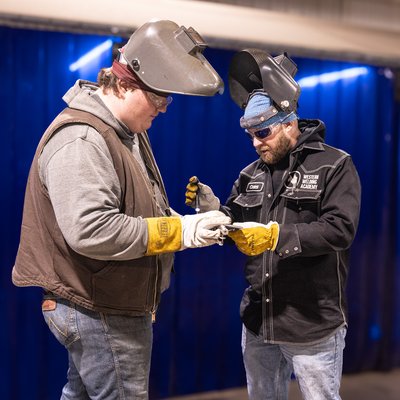
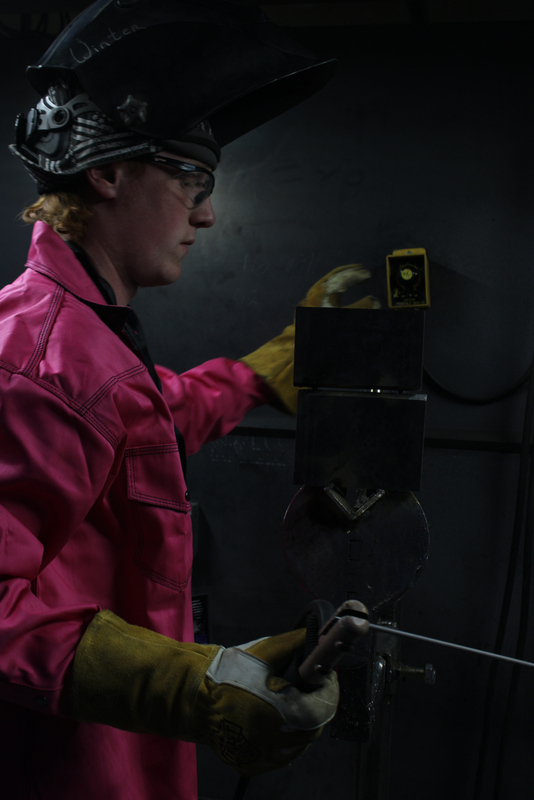
Speed in welding comes from muscle memory, not rushing. A welder who has logged thousands of hours under the hood holds a tighter arc, reads the puddle faster, and makes fewer mistakes. Fewer mistakes means less grinding, less rework, and less time wasted on failed X ray inspections. That is why Western Welding Academy puts students in the booth for 40 hours per week with 85% hands on training.
The Foundational Pipe Welder program covers 12 weeks of stick, MIG, and flux core on plate and pipe. The Professional Pipe Welder program adds TIG and advanced pipe positions across 19 weeks. The Expert Pipe Welder program runs 24 weeks and covers every process, position, and material combination that employers test for.
That training translates directly to job speed. Western Welding Academy graduates pass certification tests on the first attempt at rates that outperform the national average. The academy holds the title of number one AWS Accredited Testing Facility in the country, with an 85% graduation rate compared to competitor averages of 43% to 68%.
Where Fast Welders Earn the Most
The Bureau of Labor Statistics reports a 2025 median annual wage of $53,750 for welders, cutters, solderers, and brazers. Specialty trade contractors earn a median of $59,440. But the real money goes to welders who can finish quality work fast, especially in pipeline, refinery, and offshore environments where time costs the contractor thousands of dollars per hour in equipment and crew standby.
Leyton Wagner earned $4,514 on a single paycheck after completing his training at Western Welding Academy. That paycheck reflects the premium that employers pay for welders who show up ready to produce quality welds at production speed from day one.
Gavin Walden pulled in $3,986 per paycheck working in the field. His training gave him the speed and consistency to pass weld tests and step directly into high paying roles without months of on the job catch up.
David Smolek earned $3,417 per paycheck in his first position after graduating. Noah clears $2,800 per week on pipeline work, where every joint needs to pass X ray and the pace never slows down. Hank broke $150,000 per year at age 21, proving that speed, quality, and the right training pay off fast.
These numbers come from verified graduate outcomes. The highest paying welding specialties reward welders who can produce clean, code quality joints at production speed. That combination of speed and quality starts with real training, not YouTube videos and garage practice.
Why the Right Training Makes the Difference
Western Welding Academy has graduated over 2,000 students from all 50 states. The academy reports a 94% hire rate within 90 days of graduation and a 5 to 7 month payback period on tuition. That payback period matters because every month you spend learning the wrong way is a month of lost earnings.
The academy's approach is built for speed to employment. Students spend 40 hours per week in the welding booth, not in a classroom watching slideshows. Graduates have been hired by SpaceX, Boilermakers locals, Pipefitters unions, and contractors across all 50 states. The time from graduation to first paycheck is measured in days, not months.
Start building the speed and skill that employers pay top dollar for. Apply now or call (307) 284-5313 to talk to an admissions advisor.
Frequently Asked Questions
Q1. How long does a simple welding repair take?
Most simple repairs like cracked brackets, broken hinges, or small pipe patches take 30 minutes to 2 hours. That includes setup, welding, grinding, and cooldown. A skilled welder in a well equipped shop can knock out several of these per shift.
Q2. How long does it take to weld a pipe joint?
A 6 inch schedule 40 pipe joint takes 45 minutes to 1.5 hours depending on the process and number of passes. Larger diameter pipe takes proportionally longer. A 12 inch schedule 80 joint can take 2 to 4 hours with root, fill, and cap passes.
Q3. Which welding process is the fastest?
MIG (GMAW) is the fastest manual welding process at 10 to 18 inches per minute on light to medium fillets. Flux core runs second at 6 to 12 inches per minute. Stick runs 4 to 9 inches per minute, and TIG is the slowest at 2 to 7 inches per minute.
Q4. How many hours do welders work per day?
Shop welders typically work 8 hour shifts, 40 hours per week. Field and construction welders work 10 to 12 hour shifts. Pipeline welders often work 12 to 16 hour days for 10 to 14 day stretches, followed by equal time off. Shutdown work can hit 60 to 80 hours per week.
Q5. Why do some welders finish jobs faster than others?
Speed comes from muscle memory, arc control, and knowing how to read the weld puddle. Trained welders waste less time on restarts, grinding, and rework. They also set up joints correctly the first time, which eliminates the fit up problems that slow down less experienced welders.
Q6. What makes Western Welding Academy different from other welding schools?
Western Welding Academy puts students in the booth for 40 hours per week with 85% hands on training. The academy holds the number one AWS Accredited Testing Facility ranking, reports a 94% hire rate within 90 days, and has graduated over 2,000 students from all 50 states.
Get the Speed and Skill That Pays
Every welding job runs on a clock, and the welder who finishes quality work faster earns more, gets called back, and moves up. That speed starts with real training on real equipment. Call Western Welding Academy at (307) 284-5313 or apply now to start building speed under the hood.


.jpg)
.jpg)
.jpg)
.jpg)
.jpg)
-thumbnail.jpg)

.jpg)