How Many Pipeline Welders Does the Industry Need?
The welding industry needs 82,500 new welders every year to keep up with demand and replace retiring workers. The projected deficit is 330,000 by 2028. The average age of a working welder in the United States continues to climb. More welders are leaving the trade through retirement than are entering through training programs. That gap is widening.
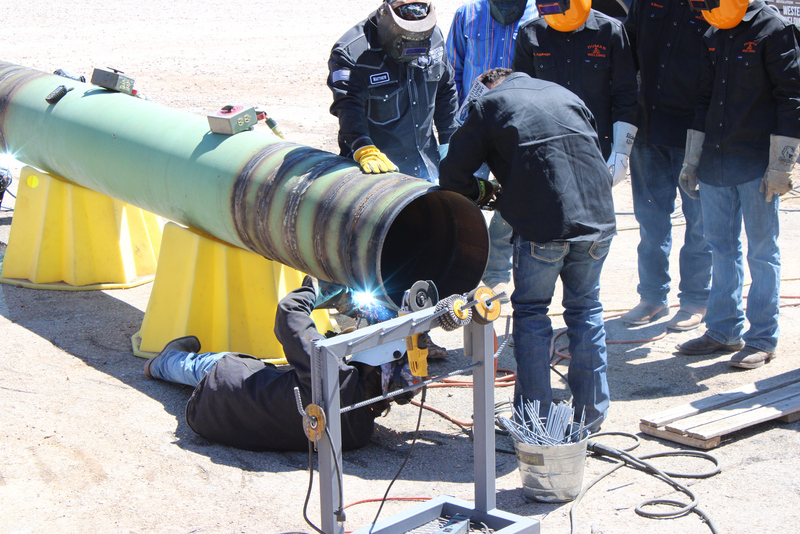
Pipeline welding specifically is one of the hardest positions to fill because the work requires specialized certifications, geographic flexibility, and the ability to handle demanding physical conditions. Contractors cannot fill their crews with production shop welders. They need welders who can pass API 1104 qualification tests and work 10 to 14 hour shifts in the field. That narrows the pool significantly.
Where Is the Pipeline Work Right Now?
The Permian Basin in West Texas and New Mexico is one of the most active pipeline construction regions in the country. Oil and gas production in the Permian has driven a sustained build out of gathering lines, transmission pipelines, and processing facility connections. Welders in this region are in constant demand.
The Gulf Coast, spanning Texas and Louisiana, is another major hub. LNG terminal construction, petrochemical facility expansion, and midstream pipeline projects keep welding crews busy year round. The Appalachian Basin covering Pennsylvania, West Virginia, and Ohio supports natural gas pipeline work tied to Marcellus and Utica shale production.
The North Slope in Alaska remains one of the highest paying pipeline welding destinations. Noah, a graduate of Western Welding Academy, took a position on the North Slope and started clearing $2,800 per week. The extreme conditions command premium rates. Midwest states including North Dakota, Wyoming, and Colorado also have active pipeline construction driven by both oil and gas production and infrastructure maintenance backlogs.
What Is Driving the Demand?
Four factors are pushing pipeline welder demand higher in 2026. First, LNG terminal construction along the Gulf Coast is creating massive welding labor needs. These multi-billion dollar projects require thousands of welders over multi-year build schedules. Second, midstream pipeline expansion is connecting new production areas to processing and export facilities. Third, aging pipeline infrastructure across the country requires ongoing maintenance, repair, and replacement. Fourth, federal infrastructure spending is funding pipeline safety upgrades and new construction.
The result is a market where qualified pipeline welders can choose their projects, negotiate their rates, and work as much or as little as they want. It is a worker's market. For context on how to time your entry into this market, read when to begin pipeline welder training for the best pay.
Ready to enter the pipeline welding job market? Apply now or call (307) 284-5313 today.
What Do Verified Western Welding Academy Graduates Earn?
The demand translates directly to paychecks. Here is what verified graduates of Western Welding Academy have earned on active pipeline projects.
Leyton Wagner earned $4,514 per paycheck after completing his program at Western Welding Academy. His paycheck was verified and published on the school's website. That level of income within months of finishing a program shows what the right training and certifications are worth in the market.
Gavin Walden brought home $3,986 per paycheck. His results were documented through graduate outcome tracking. Gavin moved directly from the program to a pipeline crew and started earning at that level immediately.
David Smolek earned $3,417 per paycheck. His verified results confirm that strong earnings are consistent across graduating classes, not limited to a handful of standout students.
Noah took a position on the North Slope in Alaska and started clearing $2,800 per week. The North Slope is one of the most demanding work environments in the country. His training through the Professional Pipe Welder program gave him the certifications and skills to handle it.
Hank hit $150,000 per year by the age of 21. While most people his age are still in college taking on debt, Hank was already building a six figure career as a traveling pipeline welder.
How Does Training at Western Welding Academy Connect to Where the Jobs Are?
Western Welding Academy has a 94% hire rate within 90 days, verified by a 234 alumni survey from November 2024. Graduates have gone on to work for employers including SpaceX, Steam 88, UFO Motorsports, Boilermakers, and Pipefitters unions. 95% of students come from outside Wyoming. The school is built for people who are relocating to train and then going wherever the work takes them.
The Expert Pipe Welder program runs 24 weeks at $35,800. The Professional Pipe Welder program is 19 weeks at $27,600. The Foundational Pipe Welder program is 12 weeks at $17,050. All tuition is all inclusive. The school holds the number one AWS Accredited Testing Facility designation with over 330 combined instructor years. For a deeper look at the best training options, read where to find the best pipe welding school in the USA now.
Is Oil and Gas Welding Stable Long Term?
Energy transition is adding work, not removing it. Hydrogen pipeline construction, carbon capture infrastructure, and natural gas bridge fuel projects all require the same pipe welding skills as traditional oil and gas work. The welders who build oil pipelines today will build hydrogen pipelines tomorrow. The certifications transfer. The skills transfer. The demand is structural, not cyclical.
Maintenance alone sustains the industry. The United States has over 2.6 million miles of pipelines. Every one of them requires ongoing inspection, repair, and replacement. Even if new construction stopped tomorrow, the maintenance backlog would keep pipeline welders employed for decades.
Ready to train for the pipeline jobs that are hiring right now? Apply now or call (307) 284-5313 today.
To meet this demand, the Expert Pipe Welder program trains students across SMAW, GTAW, GMAW, and FCAW in 24 weeks.
Frequently Asked Questions
Q1. Are pipeline welders in demand right now?
Yes. The welding industry needs 82,500 new welders per year and the projected deficit is 330,000 by 2028. Pipeline welding specifically is one of the hardest positions to fill due to certification requirements and the physical demands of field work. Contractors across the Permian Basin, Gulf Coast, and North Slope are actively hiring.
Q2. How many pipeline welders are needed in 2026?
The industry needs 82,500 new welders annually across all specialties, with pipeline welding representing a significant portion of unfilled positions. The aging workforce is accelerating retirements while new enrollment in pipe welding programs has not kept pace with demand. The shortage is projected to reach 330,000 by 2028.
Q3. Is oil and gas welding a good career?
Oil and gas pipeline welding is one of the highest paying trades in the country. Entry level pipeline welders earn $40,000 to $60,000. Experienced hands earn $90,000 to $150,000 or more. Verified Western Welding Academy graduates have earned $4,514 per paycheck (Leyton Wagner) and $2,800 per week (Noah). The demand outlook is strong through 2028 and beyond.
Q4. Where are the most pipeline welding jobs?
The most active regions for pipeline welding in 2026 are the Permian Basin (Texas and New Mexico), Gulf Coast (Texas and Louisiana), Appalachian Basin (Pennsylvania, West Virginia, Ohio), North Slope Alaska, and Midwest states including North Dakota, Wyoming, and Colorado. Work is driven by LNG construction, midstream expansion, and infrastructure maintenance.
Q5. Will pipeline welding jobs decrease with the energy transition?
No. The energy transition is creating new pipeline welding work in hydrogen transport, carbon capture infrastructure, and natural gas bridge fuel projects. The same pipe welding certifications and skills transfer directly to these emerging sectors. Additionally, the 2.6 million miles of existing pipelines require ongoing maintenance and replacement.
Q6. What makes Western Welding Academy different from other welding schools?
Western Welding Academy has a 94% hire rate within 90 days, verified by a 234 alumni survey in November 2024. Students spend 85% of training time in the booth. The school is the number one AWS Accredited Testing Facility with over 330 combined instructor years. Programs range from 12 to 24 weeks with all inclusive tuition covering housing, tools, and materials.
The Pipeline Industry Is Hiring Right Now
The demand is real. The pay is proven. The training is fast. The industry needs 82,500 new welders every year and the gap is growing. Call Western Welding Academy at (307) 284-5313 or apply now to get on a crew.


.jpg)


.jpg)


.jpg)
.jpg)
.jpg)
.jpg)
.jpg)
-thumbnail.jpg)

.jpg)